

Fatma Abubaker, Mark Carver, Hana El-Badri (Eds.)
International Perspectives on Literature in ELTPalgrave Macmillan, 2025, 287 pages Hardcover ISBN: 978-3-031-96711-5 eBook ISBN: 978-3-031-96712-2 Reviewer: Anke Zondag
|
Download PDF |
Book Overview
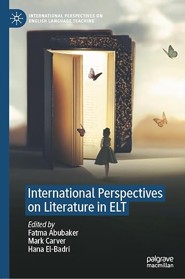
Overview of the Volume
The title states its aim clearly, a book offering international perspectives on the integration of literature in English language teaching (ELT). This edited volume is divided into four thematic parts. Part One (four chapters) focuses on literature and ELT, whereas Part Two (two chapters) explores connections between literature and language learners. Part Three (three chapters) covers pedagogical approaches to literary response and interpretation, and Part Four (four chapters) shows how literature can be applied in teacher education for English language learning.
The volume offers diverse perspectives on the role of literature in ELT and brings together contributions from scholars working in a range of international contexts, particularly across Asia, but also in locations ranging from Glasgow to Chile through to China and Japan. One of the collection’s strengths is its relevance to ELT practitioners and teacher educators working in different educational settings. The inclusion of online teaching of literature in times of crisis (chapter 12), situated in Gaza, is particularly timely.
The editors aim to support teachers in helping English language learners engage with literature in ways that extend beyond language learning and language competencies. Through embracing global perspectives, teachers and student teachers may encourage English language learners to engage more deeply with literature, encounter different ways of experiencing the world, and develop critical thinking skills.
Main Content
In the introduction, editors Fatma Abubaker and Hana El-Badri draw on several theoretical perspectives, including Rita Felski’s work on the aesthetic and affective dimensions of literature. They emphasize that literature maintains its aesthetic value when employed for educational purposes and highlight the importance of readers’ active interaction with literary texts. This emphasis on readers’ meaning-making also resonates with Louise Rosenblatt’s transactional theory of reading, which is referenced throughout the volume. While Communicative Language Teaching (CLT) emphasizes practical communication and functionality, the editors argue that literature also offers opportunities for aesthetic engagement, critical reflection, and cultural encounters while stimulating language learning simultaneously. The volume also highlights the expanding definition of literary texts which includes multimodal formats such as graphic novels, spoken word pieces, and digital narratives.
The book is contextually anchored in ELT classrooms, mainly at the tertiary level. The chapters provide research-informed pedagogical approaches and argue persuasively for the natural place of literature in language teacher education. The authors present concrete examples for using literature, with clear descriptions of pedagogic approaches, including instructions and step-by-step frameworks. The authors describe curricular contexts for utilizing literature in ELT courses and discuss policy influences on ELT. The chapters draw on a wide range of established concepts, ranging from conversation analysis to more recent frameworks such as critical multilingual language awareness and culturally responsive teaching.
Teachers are often interested in recommendations for literary texts, and though some titles are included in the chapters, the volume offers more enduring support for teaching literature in ELT. Many chapters include sections entitled ‘pedagogical implications’ or ‘engagement priorities’ which contain reflective questions for the reader. These implications and questions encourage ELT teachers and student teachers to critically engage with their own pedagogical reasoning. A concrete example of pedagogical reflections can be found under ‘engagement priorities’ in Chapter 5, where the author provides reflective questions to guide teachers and student teachers in the selection of poems. In another example from Chapter 7, the authors address teachers and student teachers separately, offering differentiated reflective questions when contemplating the use of narrative fiction.
Additionally, the chapters recommend academic texts for further exploration of each topic, encouraging the reader to engage with relevant research. In the conclusion, co-editor Mark Carver explains that the book demonstrates how literature offers opportunities for English language learning, cultural engagement, and personal growth. Carver also reminds the reader that literature is art, before discussing how the chapters place literature at the core of ELT.
Conclusion
The edited volume International Perspectives on Literature in ELT is considerably more than a guide to selecting literary texts for ELT classrooms. Rather, it offers a rich body of theoretical discussions that are likely to support ELT teachers over time. This book presents how and why literature can be used in different international contexts, drawing on the authors’ experiences, observations, and reflections on using literature in ELT courses.
As the editors emphasize, ELT teachers and student teachers should approach this volume with an open mind to the diversity of perspectives it represents. Such an approach enables a deeper appreciation of the authors’ arguments for their pedagogical choices, contextual factors, and insights. The wide geographical scope of the scholarly contributions is a particular strength, exemplified by the chapter about using poetry in Nigerian ELT classrooms. This volume thus provides a counterbalance to the Anglo-American dominance and Eurocentric perspectives that have often characterized ELT research.
Overall, the volume makes a relevant contribution to the academic literature on ELT. It will be particularly valuable for ELT teachers and student teachers seeking to critically reflect on both established research and their own assumptions about the role of literature in ELT teaching. By foregrounding international perspectives, this edited volume provides meaningful insights for ELT teachers working in increasingly diverse educational settings and with learners from a wide range of linguistic and cultural backgrounds. Although the practical examples may come from different educational contexts, ELT teachers working with children and teenagers may nevertheless find that the international perspectives presented in the volume enrich their own pedagogical reflections.
| Dr Anke Zondag is Associate Professor at the Faculty of Education and Arts at Nord University, Norway. She teaches English didactics and literature from English-speaking countries, with a special interest in Young Adult literature and drama-based pedagogy. |