

| Multicultural Inquiry as Readerly Practice: A Boundary-Case Analysis of Aaron Becker’s Journey
Julia Stakhnevich |
Download PDF |
Abstract
Text-centered approaches to multicultural children’s literature have long provided educators with practical tools for identifying texts that authentically represent historically marginalized and underrepresented communities. While highly effective for selecting and evaluating multicultural literature, these approaches offer less guidance for examining how readers engage with picturebooks that are not explicitly recognized as multicultural yet possess visual and narrative features capable of sustaining multicultural inquiry. With this article, I propose a complementary multicultural interpretive lens: a framework of critical questions that readers can use to pursue multicultural inquiry through interpretive engagement with such picturebooks. Rather than testing the framework empirically, the article illustrates its interpretive potential through a close reading of Aaron Becker’s Journey, a wordless picturebook not typically classified as multicultural. The analysis shows that Journey’s retrospective, hermeneutic structure, and hybrid visual imagery invite multicultural inquiry and demonstrate that the presence of cultural imagery does not, by itself, ensure cultural understanding. The conclusion drawn is that multicultural reading is an interpretive practice that travels with the reader, complementing rather than replacing text-centered approaches to multicultural children’s literature.
Keywords: multicultural literature, picturebooks, visual literacy, multicultural inquiry, reader meaning-making
Julia Stakhnevich is a professor of TESOL in the College of Education and Health Studies at Bridgewater State University in Massachusetts, USA. She teaches courses in Linguistics, Second Language Acquisition, and TESOL Methods. Her research interests include culturally and linguistically responsive teaching, Critical Discourse Analysis, and picturebook pedagogy.
Introduction
Over the past several decades, multicultural children’s literature has become an important area of scholarship and educational practice. As classrooms have grown more diverse, educators have sought literature that both reflects a wider range of experiences and broadens opportunities for all children to encounter perspectives beyond their own. This growing diversity created a need for practical ways of identifying books that offered authentic, respectful, and inclusive representations of those whose voices had long been marginalized or excluded. Text-centered approaches emerged in response to this need and have advanced multicultural education by making questions of representation, inclusion, authenticity, and cultural perspective central to the selection and evaluation of children’s literature.
Understandings of multicultural literature have continued to evolve. Contemporary scholarship increasingly recognizes multicultural literature as encompassing not only race and ethnicity but also the experiences of communities that have been historically marginalized or underrepresented on the basis of language, religion, disability, gender, sexuality, migration, and other social identities (e.g. Johnson, 2023). This broader understanding also reinforces the importance of examining not only representation within texts but also the interpretive practices through which readers engage with them. Here, ‘multicultural inquiry’ emphasizes readers’ critical engagement with questions of representation, identity, marginalization, and power as they construct meaning through picturebooks.
These approaches provide valuable guidance for selecting and evaluating multicultural literature, but offer less support for examining how readers engage with picturebooks that are not explicitly recognized as multicultural yet possess visual and narrative features capable of supporting multicultural inquiry. This creates space for complementary approaches that focus on the relationship between readers and texts. From this perspective, multicultural meaning does not reside exclusively within a text or within its thematic content. Rather, it emerges through the interaction between readers’ interpretive practices and the particularities of the text. To explore this proposition, the article presents a close reading of Aaron Becker’s Journey, a wordless picturebook not typically recognized as multicultural. The analysis demonstrates how readers’ interpretive engagement can generate multicultural inquiry when applied to picturebooks that might invite this.
Theoretical Positioning
As multicultural education gained prominence, educators needed practical criteria for selecting books that would broaden curricular representation while avoiding stereotypical or inaccurate portrayals of marginalized groups. In response, scholars developed text-centred approaches grounded in authenticity, cultural accuracy, insider perspectives, and positive representation (Yokota, 1993). Together, these approaches provided educators with frameworks for selecting and evaluating multicultural literature and helped diversify classroom collections and school libraries (when present).
Among the scholars who shaped this tradition, Bishop’s work has been particularly influential. As Möller (2016) observes, Bishop developed several frameworks for conceptualizing multicultural literature over the course of her scholarship. Three contributions stand out: a thematic framework organized around the purposes of multicultural literature, a framework emphasizing approach and cultural specificity, and the widely recognized mirrors, windows, and sliding glass doors metaphor (Bishop, 1990). Although these frameworks differ in organization, they generally share a common assumption: multiculturality is understood primarily as a characteristic of the text itself. Bishop’s definition of multicultural literature as ‘children’s fiction and picture books published in the United States (and England) about people of color’ (Bishop, 1992, p. 44), cited by Möller (2016), reflects the historical context in which this body of scholarship developed and illustrates the field’s early emphasis on racial and ethnic representation. Contemporary scholarship has since broadened this understanding to encompass a wider range of marginalized communities (Botelho, 2015).
Bishop’s (1990) metaphor of mirrors, windows, and sliding glass doors implies the importance of the relationship between readers and texts. Literature may function as a mirror that reflects readers’ own lives, as a window into the experiences of others, or as a sliding glass door that invites readers to imaginatively enter another world. This framework shifts attention from the characteristics of texts to the relationship between texts and readers. While the mirrors-windows metaphor has profoundly influenced literacy education and discussions of the purposes of multicultural literature, it has not yet been developed into a comparable interpretive framework for examining how readers construct multicultural understandings through reading itself.
New Framework: Multicultural Interpretive Lens
The present article builds upon this reader-oriented perspective by proposing a multicultural interpretive lens: a framework of critical questions that readers can use to pursue multicultural inquiry through interpretive engagement with picturebooks. Rather than replacing existing text-centered approaches, the proposed lens complements them by extending multicultural inquiry beyond the selection and evaluation of texts toward readers’ interpretive engagement with them.
Originally developed as part of a TESOL graduate course on multicultural visual narratives, the framework consists of four interconnected components that together support multicultural inquiry (see Table 1). Part I establishes the educational purposes of multicultural literature. Parts II and III examine two complementary dimensions of meaning-making – one centred on the reader and the other on the picturebook. Part IV brings these perspectives together in multicultural inquiry by focusing attention on questions of language, culture, identity, and representation. The present analysis draws primarily on Parts II and IV because these components are particularly relevant to a wordless picturebook, where meaning must be constructed almost entirely through visual interpretation rather than through language.
| Framework part | Guiding question | Core concepts | Application to Journey |
| I. Why these books matter (Bishop, 1990, 1992, 1997) | How might a picturebook function as a mirror, window, or sliding glass door for its readers? | Mirrors; windows; sliding glass doors | Not applied directly in this analysis. This part establishes the reader-text relationship, developed in the Theoretical Positioning section, that motivates the multicultural interpretive lens as a whole. |
| II. Reader meaning-making | How do readers construct meaning, and how do their cultural backgrounds, prior knowledge, interpretive processes, and emotional responses shape their understandings of a picturebook? | Gaps; inference; intertextuality; cultural and background knowledge; interpretive and affective engagement; multiple interpretations | Intertextuality as well as cultural and background knowledge surface in recognizing Journey’s echo of Harold and the Purple Crayon. Gaps and inference operate through the book’s retrospective structure, in which the purple crayon’s meaning is withheld until later spreads. Multiple interpretations frame the two coexisting readings of the hybrid visual landscape – celebratory and exoticizing. |
| III. Picturebook meaning-making (Nikolajeva & Scott, 2006) | How do picturebooks construct meaning through words, images, and design, and what cultural assumptions are embedded in those choices? | Paratext and book design; visual design; words and images; perspective and voice; characterization; setting | Not the primary lens for this analysis. Visual design and setting inform the description of Journey’s hybrid landscape (medieval castles, pagodas, samurai-like guards, airships) but are treated in service of Part IV rather than examined independently. |
| IV. Language, culture, identity, and representation (TESOL/ Critical Discourse Analysis lens) | How are language, culture, identity, and representation constructed in the picturebook, and whose perspectives and experiences are centred, marginalized, or absent? | Multilingualism; language variety; representation; cultural identity; belonging; power and voice; author and illustrator perspectives; historical and cultural context | Representation along with historical and cultural context anchor the central critique of Journey’s hybrid visual landscape. Power and voice as well as author and illustrator perspectives drive the exoticization question – whether non-Western imagery functions as authentic representation or exotic scenery. Multilingualism and language variety are not applicable, since Journey is wordless. |
Table 1. The multicultural interpretive lens and its application to Journey
Case Study of Journey
An examination of Becker’s Journey follows in order to explore how multicultural meaning can emerge through readerly practice rather than reside solely in the text. Journey would not ordinarily be classified as multicultural because it does not explicitly portray a particular cultural community, historical experience, or social issue associated with multicultural children’s literature. Its wordless narrative requires readers to construct meaning by drawing upon their cultural knowledge, assumptions, and prior experiences. This combination makes Journey a useful boundary case.
Here, I use boundary case to refer to a picturebook that occupies the boundary of multicultural literature rather than fitting within or outside that category. If the proposed lens generates insights when applied to a boundary case, the analysis suggests that multicultural inquiry is not confined to a particular class of texts but can function as a mode of reading that emerges through readers’ interpretive engagement with picturebooks.
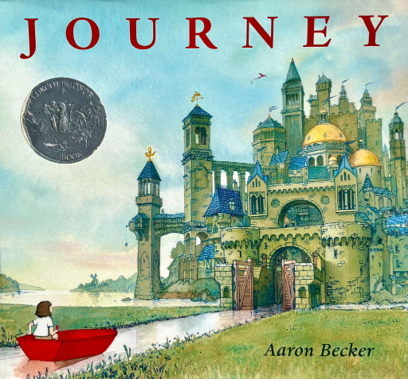
Figure 1. Cover of Journey (Becker, 2013), reproduced with reference to the text discussed in this article.
The analysis that follows relies on a close reading of Journey’s visual narrative through iterative examination of the book’s images, sequencing, and recurring symbols. Because Journey is wordless, a close reading means treating the illustrations themselves as the primary text, attending to colour, composition, and the relationship between individual spreads and the narrative as a whole. This approach is consistent with the hermeneutic tradition of interpretation invoked throughout this article, in which meaning is built recursively through continued attention.
Central to Becker’s visual narrative is the image of the crayon as a tool of transformation. The girl’s red crayon and the boy’s purple crayon each independently generate imaginative worlds – the girl draws a door into an elsewhere, the boy helps her draw her way out of captivity – yet neither crayon dissolves into the other. The final image of the book makes this explicit: the two children ride a bicycle with one red and one purple tyre, each child holding their own crayon, the purple bird flying above them. What Becker gives us is an image of imaginative collaboration – two distinct tools, two distinct agencies, creating something together that neither could have created alone. The relationship between the two crayons offers a useful way of thinking about the proposed multicultural interpretive lens: the lens does not classify texts into predetermined categories but serves as a tool that readers bring to a text, generating inquiry that neither the reader nor the text could produce independently.
Recognizing this symbol also depends on specific background knowledge, namely, familiarity with the American picturebook canon. Becker’s crayon-as-tool-of-transformation is not an isolated invention but a direct intertextual echo of Crockett Johnson’s Harold and the Purple Crayon (1955), in which a small boy draws his entire world, and his way out of danger, using a purple crayon. Journey’s opening spread, in which a solitary child draws a door into an imagined world with a crayon, unmistakably evokes the earlier book. Yet Becker does not simply repeat Johnson’s premise; whereas Harold’s crayon is solitary, Journey introduces another child with a differently coloured crayon, a detail that transforms a story about individual imagination into one about collaborative imagination. The revision becomes significant only to a reader who recognizes the source text; a reader unfamiliar with Harold and the Purple Crayon will still follow Journey’s plot but will miss the specific argument the book makes about imagination becoming most powerful when it is shared rather than solitary. The framework’s intertextuality category points toward this notion – meaning depends not on the text alone but on a reader’s prior encounters with other texts, a dynamic well documented in research on picturebooks that allude to earlier visual and literary works (Sipe, 2001; Beckett, 2010).
As a boundary case, Journey raises an important question: does its visual narrative require readers to participate in meaning-making? Becker’s narrative suggests that it does. Journey functions as a narrative experience in which meaning accumulates rather than unfolds linearly. Many of the book’s most significant symbols become meaningful only in retrospect, after the reader has completed the story and returned to its earlier pages. This retrospective structure reflects what Gadamer (2004) describes as the hermeneutic movement between parts and the whole, in which understanding develops recursively rather than through linear accumulation. The purple crayon offers a clear illustration of this dynamic. Upon first reading, a reader may notice the boy holding it in the opening spread, but its meaning remains obscure. Only after encountering the purple bird and witnessing the reciprocal relationship that develops between the boy and the girl, does the crayon become meaningful – not as a colourful detail but as the book’s symbolic argument about imagination and collaboration. The ending reshapes the beginning.
This retrospective structure places interpretive demands on the reader: meaning is not delivered by the text alone; instead, it is constructed by the reader across multiple readings. It is this demand for repeated interpretive readings that creates the conditions for a multicultural interpretive lens to operate – a reader who actively engages is a reader capable of asking critical questions about how cultures are represented, borrowed, re-imagined, and interpreted within the visual narrative.
What becomes clear is that the imaginative world constructed in Journey is not culturally neutral. Throughout the narrative, Becker draws on varied cultural and historical imagery: medieval European castles, East Asian-inspired pagodas, samurai-like guards, lanterns, and steampunk airships. Rather than grounding the story in a single cultural context, Becker assembles a hybrid visual landscape drawn from many traditions and historical periods. One reading of this imaginary landscape is celebratory: Journey presents a re-imagined world in which creativity transcends national and cultural boundaries.
Yet a more critical reading suggests that the book includes recognizable cultural imagery, but it does not provide any cultural context for those images. Readers encounter culturally significant forms without learning anything about the cultures from which these images originate. This underscores a distinction that lies at the heart of multicultural inquiry: representation is not the same as cultural understanding. Cultural symbols may be present in a text without engaging meaningfully with the lived experiences, histories, or perspectives of the people associated with those symbols. A critical reader might therefore ask whether the non-Western cultural imagery in Journey functions as authentic representation of living cultures, or whether it functions primarily as exotic scenery within a fantasy narrative that does not produce opportunities for genuine cultural engagement. From this perspective, these elements of the book can be read as exoticization, regardless of authorial intent.
These two readings of Journey are not mutually exclusive: it can simultaneously be imaginative, beautiful, and meaningful, as well as open to critical examination. A reader might celebrate the book’s vision of creativity, connection, and possibility while also asking hard questions about the function of its cultural imagery. Neither of these readings is delivered by the text itself – both are generated by the reader who pursues multicultural inquiry. The multicultural contribution of Journey may lie in enabling readers who approach it with a multicultural interpretive lens to question how cultures are represented, borrowed, re-imagined, and interpreted within visual narratives. Although it would not typically be classified as multicultural according to conventional selection criteria, Journey nevertheless generates multicultural inquiry when read through the proposed framework.
The questions that emerged throughout the analysis – about cultural representation, borrowing, identity, and perspective – did not arise because Journey belongs to a particular type of text. Rather, they emerged through the encounter between the reader’s multicultural interpretive lens and Becker’s visual narrative. This boundary case therefore demonstrates that multicultural inquiry cannot be understood solely as a property of texts; it also depends upon the interpretive framework readers pursue with those texts.
Journey is not read as multicultural because any text could be read this way, but because its specific qualities – a hybrid visual landscape assembled from medieval European, East Asian, and steampunk sources, and a retrospective structure that rewards repeated reading – make it susceptible to this inquiry in a way that many picturebooks are not. Had Journey contained no recognizable cultural or historical imagery, the exoticization question explored above could not have arisen; there would have been nothing for the multicultural interpretive lens to engage with. The critical readerly practice demonstrated in this analysis therefore required two conditions: a reader pursuing multicultural inquiry through interpretive engagement with the text, and a text possessing visual qualities capable of supporting that framework’s questions.
The close reading of Journey suggests that multicultural inquiry does not reside solely within the picturebook or the reader. Rather, it emerges through the interaction between reader meaning-making and picturebook meaning-making. Picturebooks embody the semiotic choices of authors and illustrators through visual design, narrative structure, perspective, characterization, and other meaning-making resources, while readers interpret those choices through their cultural backgrounds, prior knowledge, interpretive strategies, and affective engagements. This interaction directs multicultural inquiry toward questions of language, culture, identity, and representation.
Pedagogical Implications
The preceding analysis of Journey suggests a classroom application of the multicultural interpretive lens: a teacher using Journey might invite students to identify the specific cultural and historical references that populate Becker’s imagined world – the pagodas, the samurai-like guards, the lanterns, the steampunk airships – and then ask a deceptively simple question: how realistically do these elements function within the story? Such a question does not presuppose a single correct answer. Some students may observe that the images function primarily as visual shorthand for an exotic “elsewhere”, detached from any specific culture or historical period; others may recognize particular architectural or aesthetic traditions and begin to ask why those traditions appear stripped of the people, practices, and histories that produced them. Both responses model the kind of critical noticing that the multicultural interpretive lens is designed to cultivate.
A second, equally important question follows from the first: what more would students like to know about these references? This question positions students as active researchers rather than passive consumers of the text’s imagery. A class might, for instance, investigate the architectural history of pagodas, the cultural functions of lanterns in different East Asian traditions, or the visual conventions from which Becker’s samurai-like guards are drawn. Framed this way, the imprecise use of cultural imagery in Journey becomes a stepping stone for cultural learning rather than simply an object of critique. Students do not need to conclude that Becker’s choices were appropriate or inappropriate; they need only to recognize that the book’s visual references gesture toward real cultures and histories that merit further exploration on their own terms.
This two-part questioning sequence – asking how realistically an image functions and asking what more one would want to know about it – offers teachers a replicable strategy that extends beyond Journey. It operationalizes several categories from Part IV of the proposed framework, including representation, cultural identity, and historical and cultural context, by translating them into classroom-ready prompts rather than leaving them as abstract analytic categories. In this sense, the exoticization question raised by Journey is not only a matter for scholarly debate but a model for how the multicultural interpretive lens can move from critical reading practice into classroom dialogue.
If multicultural inquiry depended primarily on identifying multicultural texts, then opportunities for critical engagement would remain largely confined to a limited portion of the curriculum. By contrast, a multicultural interpretive lens transforms multicultural inquiry into an ongoing readerly practice. Rather than asking whether a picturebook qualifies as multicultural, teachers might ask: Which cultures become visible in this text? Which perspectives remain absent? What assumptions about identity, belonging, or difference are being communicated? How might readers from different backgrounds experience this narrative differently?
These pedagogical questions are relevant to English language teaching contexts, where wordless picturebooks such as Journey might offer a distinct advantage over text-based literature in some instructional settings. Because meaning is constructed almost entirely through images, learners are not blocked by unfamiliar vocabulary or syntax; instead, they can draw on the same visual information available to any reader, regardless of their current level of English proficiency (Early, 1991; Honaker & Miller, 2024). This makes wordless picturebooks a rare classroom resource that does not force a trade-off between linguistic accessibility and interpretive complexity: a learner with limited English can engage with the same multicultural questions as a fluent peer.
At the same time, the language surrounding the images need not be limited to what learners can already produce on their own. A teacher reading Journey aloud or guiding a discussion of its crayon symbolism or hybrid visual landscape, can model language that sits slightly above learners’ current productive ability while remaining comprehensible because it is anchored in what students can see on the page (Gibbons, 2015). This scaffolded gap between what learners can understand and what they can independently produce allows the multicultural interpretive lens proposed in this article to function simultaneously as a tool for language development and for critical interpretation, rather than treating these as separate instructional goals.
Consequently, teacher education should focus not only on helping future educators select diverse and representative literature but also on cultivating the interpretive habits necessary to read visual narratives critically. The proposed framework offers one approach to developing these habits by encouraging readers to examine how language, culture, identity, representation, and reader meaning-making interact during the reading process. Such preparation helps teachers recognize both the strengths and the limitations of texts while remaining attentive to the multiple ways meaning is constructed through the encounter between reader and narrative.
Ultimately, the boundary case presented by Journey suggests that multicultural education is strengthened when representation and interpretation are understood as complementary rather than competing goals. Diverse classroom libraries remain indispensable because students deserve opportunities to encounter authentic representations of many cultures and identities. At the same time, a multicultural interpretive lens allows teachers and students to engage thoughtfully with a wider range of texts, revealing assumptions, perspectives, and possibilities that might otherwise remain unnoticed. In this sense, multicultural reading becomes not simply a characteristic of particular books but a readerly practice that readers carry with them across the curriculum.
Conclusion
The analysis of Journey demonstrates that multicultural inquiry cannot be understood solely as a property of texts. Rather, it emerges through the interaction between the multicultural interpretive lens that readers employ and the possibilities offered by a visual narrative. By applying the proposed framework to a picturebook that would not typically be classified as multicultural, this article has shown that questions about culture, identity, representation, and perspective can arise even in the absence of explicit multicultural content. The implications of this boundary case therefore extend beyond Journey itself, suggesting that multicultural inquiry is not confined to a particular category of literature but can become a readerly practice applied across a broad range of visual texts.
This argument is not intended to diminish the importance of thoughtfully selecting authentic and diverse literature for classroom instruction. Diverse classroom libraries remain indispensable because they provide students with opportunities to encounter voices, experiences, and perspectives that have too often been marginalized. Rather, the multicultural interpretive lens proposed here complements the text-centred approaches by expanding the kinds of questions teachers and students can ask of the picturebooks they read. In doing so, the article broadens the question from identifying which books qualify as multicultural to cultivating the interpretive habits that encourage readers to examine representation, cultural assumptions, identity, and meaning-making across the curriculum.
The pedagogical implications of this shift extend to teacher education as well. Preparing teachers, including TESOL educators, to work with multicultural literature involves more than developing thoughtful selection practices; it also requires cultivating the ability to read critically through a multicultural interpretive lens. Such preparation equips educators to recognize both the strengths and the limitations of visual narratives while remaining attentive to the multiple ways meaning is constructed through the interaction between text and reader. Rather than limiting multicultural inquiry to designated texts, teachers can foster this critical method of reading across the curriculum, creating richer opportunities for dialogue, reflection, and interpretation. In language education, this perspective suggests that interpretive engagement with visual narratives can support language development and multicultural inquiry simultaneously, rather than treating them as separate instructional goals.
The present article examines a single picturebook as a boundary case. Future research might apply the proposed framework to picturebooks that are already widely recognized as multicultural, compare its use across different genres of visual narratives, or investigate how teachers and students employ the framework in classroom settings. Ultimately, this article argues that multicultural inquiry is best understood as a readerly practice rather than simply as a characteristic of particular books. A multicultural designation remains attached to the text; a multicultural interpretive lens travels with the reader.
Bibliography
Becker, Aaron (2013). Journey. Candlewick Press.
Johnson, Crockett (1955). Harold and the Purple Crayon. Harper & Row.
References
Beckett, S. (2010). Artistic allusions in picturebooks. In T. Colomer, B. Kümmerling-Meibauer, & C. Silva-Díaz (Eds.), New directions in picturebook research (pp. 83–98). Routledge.
Bishop, R. S. (1990). Mirrors, windows, and sliding glass doors. Perspectives, 6(3), ix–xi.
Bishop, R. S. (1992). Multicultural literature for children: Making informed choices. In V. J. Harris (Ed.), Teaching multicultural literature in grades K–8 (pp. 37–53). Christopher-Gordon.
Bishop, R. S. (1997). Selecting literature for a multicultural curriculum. In V. J. Harris (Ed.), Using multiethnic literature in the K–8 classroom (pp. 1–19). Christopher-Gordon.
Botelho, M. J. (2015). Learning from/with multicultural children’s literature. In D. J. Flinders & S. J. Thornton (Eds.), The SAGE guide to curriculum in education (pp. 268–275). SAGE. https://doi.org/10.4135/9781483346687.n39
Early, M. (1991). Using wordless picture books to promote second language learning. ELT Journal, 45(3), 245–251. https://doi.org/10.1093/elt/45.3.245
Gadamer, H.-G. (2004). Truth and method (2nd rev. ed., J. Weinsheimer & D. G. Marshall, Trans.). Continuum. (Original work published 1960.)
Gibbons, P. (2015). Scaffolding language, scaffolding learning: Teaching second language learners in the mainstream classroom (2nd ed.). Heinemann.
Honaker, J. D., & Miller, R. T. (2024). Wordless but not silent: Unlocking the power of wordless picture books. TESOL Journal, 15(1), Article e721. https://doi.org/10.1002/tesj.721
Johnson, D. (2023). The joy of children’s literature (3rd ed.). Routledge. https://doi.org/10.4324/9781003015680
Möller, K. J. (2016). Creating diverse classroom literature collections using Rudine Sims Bishop’s conceptual metaphors and analytical frameworks as guides. Journal of Children’s Literature, 42(2), 64–74.
Nikolajeva, M., & Scott, C. (2006). Words about pictures: The narrative art of children’s picturebooks (2nd ed.). Routledge.
Sipe, L. R. (2001). Using picturebooks to teach art history. Studies in Art Education, 42(3), 197–213. https://doi.org/10.2307/1321037
Yokota, J. (1993). Issues in selecting multicultural children’s literature. Language Arts, 70(3), 156–167.