

| A Focus on Multiliteracies: Multimodal Narratives and a Blog in English Teacher Education
Michael C. Prusse |
Download PDF |
Abstract
Student teachers in the twenty-first century require knowledge about multiple literacies and how to teach them. Consequently, it no longer suffices to equip student teachers with the tools to instruct literary reading in an English language teaching context. Pre-service teachers require a notion of how to approach different literacies, preferably by focusing on multimodal narratives. Student teachers in courses on children’s literature at the Zurich University of Teacher Education are taught about multiple literacies and may use a blog to publish their analyses of narrative across media formats. This task design is motivated by the insight that learning should not just focus on performance in the present but be geared towards future uses. Digital platforms permit global visibility and, potentially, a worldwide audience. Ultimately, student teachers profit by sharing their insights and developing them in cooperation with others. The Children’s Literature Blog (Prusse, 2017) supports them by offering a resource for ideas and materials for ELT classrooms. Among the 131 student teachers’ contributions to the blog, those that focus on picturebooks are evaluated by means of reflexive thematic analysis. The presentation of selected results is also based on questionnaires filled in by course participants, qualitative guided interviews of a number of students, and the blog’s impact measured by means of global access records. These provide additional research data that permit an insight into the teaching and learning about narrative, multiliteracies, and the affordances of a public blog.
Keywords: multiliteracies, multimodality, picturebooks, English teacher education, blog
Michael C. Prusse is Professor of English Language Teaching (Fachdidaktik Englisch) at the Zurich University of Teacher Education (Pädagogische Hochschule Zürich). His research focuses on Children’s and Young Adult Literature in ELT, literature and cultural studies in ELT, and teaching English in professional contexts.
Introduction
This article begins by considering multiliteracies and multimodality as key elements of English language teaching (ELT) in the twenty-first century. Next, the specific setting of the study within courses in children’s literature at a university of teacher education in Zurich (Switzerland) is introduced before outlining how multiliteracy instruction occurs within this environment. In the following, a brief account of the research methodology is provided and since this investigation relies on action research, its limitations are also emphasized. In addition, there is a description of the tasks administered to the student teachers and the resulting data sample. It is reasoned that the multimodal nature of the blog has facilitated its function as a vehicle for the resulting products. Furthermore, the motivation to establish such an instrument in the first place is explored while also documenting how it succeeds in achieving global reach. Ultimately, selected student teachers’ blog entries are analyzed in more detail, and some cautious conclusions are drawn.
Multiliteracies and Multimodality
The twenty-first century requires teachers around the globe to instruct their learners in media and information literacy ‘with the objective of using information, media and digital tools as autonomous and critical thinking citizens with agency.’ (Grizzle et al., 2021, p. 15). The focus on teachers is an astute choice given their pivotal role in preparing generations of young learners for the future. While many children come to classrooms with an experience of a range of digital literacies (they perceive them as given and as belonging to their everyday life), some adults, and even teachers, still tend to ‘talk about the new technologies’ (Anstey & Bull, 2009, p. 34). ‘Media and information literacy’ (MIL) is the umbrella term UNESCO (Grizzle et al., 2021, p. 8) selected in their endeavour to promote aspects such as enabling individuals to participate in society, supporting democratic processes, and encouraging critical thinking when analysing ‘information providers for authenticity, authority, credibility and current purpose, weighing up opportunities and potential risks’ (Grizzle et al., 2021, p. 17). Moreover, young learners need to develop a critical awareness of how information is transmitted, and who is addressed. UNESCO’s focus is on judicious analyses of credibility and ethical use and aims at fostering what Stephens calls ‘a self-reflexive awareness of the politics and sociology of media’ (Stephens, 2007, p. 253). In a similar vein, the pedagogy of multiliteracies, as memorably labelled by the New London Group (1996), aims at preparing pupils to cope with multiple forms of literacy by analyzing and evaluating information from diverse sources. The emphasis here is on meaning-making across multiple modes, and on agency (Lütge, 2018; New London Group, 1996). Using multiliteracies as an educational framework highlights the aspects that are still relevant ‘in traditional approaches to reading and writing, and to supplement this with knowledge of what is new and distinctive about the ways in which people make meaning in the contemporary communications environment’ (Kalantzis et al., 2016, p. 1). Hence, multiple literacies are not exclusively a recent phenomenon but have become more prominent in the present because ‘technological change has necessitated the development of new literacies’ (Anstey & Bull, 2009, p. 34).
Multimodality was certainly already an established practice before the emergence of multiple literacies, since picturebooks, for instance, have always been distinguished by the combination of text and image (Nikolajeva & Scott, 2001; Serafini, 2014). Thus, they have had their proper place in education for some time, both in private settings, when adults and children read a picturebook together, and in schools where teachers have long used them as vehicles to teach (print) literacy and to awaken schoolchildren’s curiosity, not just for the world outside their classroom but also for the world of the imagination. Yet, picturebooks have gained a new sense of relevance in the technology-driven twenty-first century, which compels learners ‘to navigate across an increasingly complex communication landscape and to negotiate a range of contexts and patterns of intercultural meanings as well as the prevalence of multimodal texts’ (Lim et al., 2022, p. 1). This landscape is further characterized by its multilingual global circumstances, in which English as the international lingua franca dominates and has become essential educational content to enable learners to join the discourse and participate in intercultural communication (see Hallet, 2008, p. 172).
In the context of learning English as a foreign language, children’s literature in general is perceived as the ideal vehicle to familiarize teachers with new literacies and to have them ‘engage in multiliteracies’ (Anstey & Bull, 2006, p. 82). Picturebooks prove to be instrumental in this process because they ‘can provide a narrative scaffold to help the reader follow the story even when their linguistic competence is still limited’ (Bland, 2015, p. 25). While this perception still prioritizes print over pictures – the images support the comprehension of the written narrative – the significance of visual literacy should not be underestimated, particularly in postmodern picturebooks (Pantaleo, 2009), where the illustrations and words sometimes relate different stories: ‘This allows for an easy introduction into the linguistic and visual semiotic systems for children of any age’ (Anstey & Bull, 2009, p. 36). Thus, the combination of text and image permits honing skills in visual literacy or, as Serafini (2009, p. 10) puts it, ‘the contemporary picturebook has a great deal to offer.’ This line of argument is also supported by Bland (2022, p. 12), who maintains that English language learners are preferably confronted with authentic picturebooks or graphic novels rather than ‘monomodal, simplified graded readers.’ She also underlines the fact that frequently it is not just the language that proves to be the obstacle to comprehension, but the difficulties may well arise from failing to grasp the cultural content. Accordingly, younger learners may discover the cultures of the English-speaking world by means of picturebooks and older learners can profit by perusing another media format that combines words and images: ‘Graphic novels bridge the wordy world of the past with the visual present’ (Bland, 2022, p. 12).
Readers of picturebooks (and of graphic novels) require ‘metamodal awareness’ (Serafini, 2024, p. 5) to comprehend how the two distinct semiotic modes both function and interact: ‘Clearly, children need to acquire knowledge about the visual semiotic system if they are to make meaning from paper texts. This is particularly the case for picturebooks, where the images increasingly play a role in the construction of meaning’ (Anstey & Bull, 2009, p. 27) and it also explains ‘why in a multimodal literacies pedagogy powerful learning occurs when written text and image are closely connected’ (Kalantzis & Cope, 2025, p. 143). If the traditional setting of picturebook narrating and contemplating is considered, which normally involves one adult and at least one child, this communicative situation encompasses further semiotic modes like the ‘visual, gestural, spatial, linguistic, and others’ (Lim et al., 2022, p. 1). This necessitates moving beyond ‘decoding linguistic elements to consider multiple systems for representing and communicating potential meanings’ (Serafini, 2024, p. 5), for instance ‘semiotic awareness’ to identify how ‘words, images, design elements, layouts and technologies’ are employed to transmit layers of conceivable interpretations that are linked to specific ‘social, cultural, historical, and political contexts’ (Serafini, 2024, p. 8). Nevertheless, learners still need to acquire concepts such ‘as plot, theme and characterization, and they still need to be aware of the grammar of the linguistic system. However, the linguistic should not take precedence over the other semiotic systems’ (Anstey & Bull, 2009, p. 28).
The Setting of the Study
International student teachers from partner universities around the world (PHZH, 2025) require courses that are taught in English when they arrive for an exchange semester at the Zurich University of Teacher Education (where most of the curriculum is taught in German). This is essentially the reason why the two modules in children’s literature that provide the data for this research project were called into existence. They address the affordances of children’s and young adult media in English language teaching and supplement the regular course programmes offered to Swiss student teachers, namely language and general ELT methodology classes for those enrolled in primary teacher education and, just for those qualifying to become lower secondary teachers, in addition to language and ELT methodology, courses in linguistics and literature. Hence, these two modules on children’s and young adult media were primarily conceived for the international students but are also offered as electives for the local student teachers in Zurich. In the period from spring 2017 to spring 2025, the ratio between Swiss and foreign students has been less than 1:3 (the number of Swiss students amounts to 28%).
The student teachers that join the children’s literature courses form a heterogeneous group because they include incoming students from a range of countries across the globe and because both international and local participants aim to qualify as teachers for different age groups, in other words for kindergarten, primary, and lower secondary. There is even a small minority that will become teachers at the upper secondary level. The aggregated numbers for the past two semesters provide a rough estimate on the distribution of student teachers within the range of teaching degree programmes.
| Teaching degree programme | Percentage of students (42 in total) | |
| 1 | Kindergarten | ≈ 13% |
| 2 | Primary school | ≈ 69% |
| 3 | Lower secondary school | ≈ 13% |
| 4 | Upper secondary school | ≈ 5% |
Table 1. Distribution of student teachers according to degree programme (autumn 2024/spring 2025)
The course programmes, both in autumn and spring terms, feature a similar temporal sequence: at the beginning of each semester, student teachers become acquainted with definitions, selected aspects of the history of children’s and young adult literature, and fairy tales respectively. Next, for approximately a third of the term, they encounter a selection of classics such as Alice in Wonderland, Little Women, Anne of Green Gables, or Treasure Island. Finally, the remainder of both terms is dedicated to a topical approach that deals, for example, with refugee and migrant narratives, time-travel stories, dystopian futures, historical novels about war, or with children and young adults as detectives (see Prusse, 2025a).
All these investigations into the classics of children’s literature or into texts that address a common topic are supplemented by adaptations or creations in other media formats such as movies, television series, plays, graphic novels or picturebooks. It is primarily by means of the visual media that multiple literacies are addressed, and the character of these formats lends itself to concentrating on visual literacy. Considering these different products, student teachers are asked to read closely and deeply (Bland, 2022) when watching film clips, when viewing a picturebook or a graphic novel, and to acquire a certain amount of critical vocabulary in order to be able to describe what they have noticed to their peers and, hopefully, in future to the learners in their classrooms: ‘If teachers are going to be able to help children make sense of the visual images and written language of the picturebook, they need first to be able to analyse and comprehend these multimodal texts themselves’ (Serafini, 2009, p. 11).
The goal of both modules is to provide student teachers with materials and tasks that they can then transform for use in their own future classroom practice. Furthermore, the expectation is that student teachers become multiliterate, which means that they have to think in a strategic manner in order to be ‘able to recognise what is required in a particular context, examine what is already known, and then, if necessary, modify that knowledge to develop a strategy that suits the situation’ (Bull & Anstey, 2019, p. 7). Ultimately, student teachers shall strive towards instilling these abilities in the learners they will encounter in their future school settings. When investigating student teachers’ education in these two modules, as course instructor I engage in action research (Altrichter et al., 2008; Burns, 2019; 2024; Koshy, 2010). The focus is on a university classroom with varying groups of learners and very much depends on both the input student teachers provide and the output they generate. Thus, the limitations of this approach are that the results cannot be generalized but necessarily refer to a specific context and setting.
Learning About Multiple Literacies
The shift from text to image, or as Boehm (1994) labels it, the ‘iconic turn,’ is one aspect of the noticeable changes in media consumption in the last few decades, which have had only a limited impact on curricula and teaching practices in classrooms. As a result, teachers and learners would need to acknowledge that in addition to the verbal, the visual has become an urgent priority, but apparently neither group has yet developed the necessary coding and decoding competencies that is required for visual literacy (see Hallet, 2008, p. 169). This finding is backed by several more recent studies, which establish that teachers and student teachers persistently ‘lack the visual competence necessary to effectively perceive, interpret, receive, and produce images’ (Levratto et al., 2024, p. 340; Bautista et al., 2022; Guo et al., 2024). Further supporting evidence for this claim emerges from the interviews with individual student teachers and from feedback given during the courses. It shows that those enrolling in a programme leading to a teaching qualification in Switzerland (and presumably this holds true for many other countries, given the international participants in the courses) are relatively well-equipped when it comes to the analysis and interpretation of written (literary) texts. However, they tend to lack a background and experience in critical visual literacy or, as Stephens (2007, p. 256) adeptly puts it, they ‘appear surprisingly inept when it comes to visual literacy.’ The reason for this inadequacy most probably results from a lack of schooling and from not being provided with the necessary strategies ‘to make sense of the vast array of visual images and multimodal ensembles they encounter’ (Serafini, 2014, p. 4). Hence, ‘learners may not be fully aware of this [deficit], because they have not needed to call on this literacy in an academic context but rather in contexts of entertainment’ (Goldstein, 2016, p. 17). Moreover, in German-speaking countries, there frequently persisted predispositions among many language teachers that images are self-explanatory (see Hallet, 2008, p. 168). Thus, a lack of an academic visual education may be due to the long-held fallacy that photographs, for example, are simply ‘reproductions of empirical reality’ (Stephens, 2007, p. 253) and, consequently, do not require interpretation.
Any measures to be taken to implement multiple literacies in education require, above all, that initiatives are conceived that impact the curricula of teacher education. This goal can be achieved by either radically altering the practices in schools of education, which tends to provoke opposition and leads to encounters with a range of obstacles, or alternatively, by means of small adaptations that encourage student teachers to gradually expand their repertoire in teaching literacies. While proponents such as Serafini (2009) or Alruthaya et al. (2025) apply the theories of Kress and van Leeuwen (2021) and others to examine pictures by means of terms such as ‘vectors’, ‘salience’, ‘foregrounding’, or ‘positioning’, there are alternative approaches that rather rely on the terminology of graphic novel criticism, for instance McCloud (1993), or on the language of film criticism. Since it can be an overwhelming experience for any learner to be confronted with a diverse range of new critical vocabulary to analyse the visual elements in picturebooks or films, the two courses at the Zurich University of Teacher Education are characterized by an attempt to use selected model activities to alert student teachers to the relevance of critically analysing images. The simplest way to do so involves picturebooks since ‘[w]ritten text and image both involve spatial arrangement on a two-dimensional plane’ (Kalantzis & Cope, 2025, p. 142).
One possible lead into noticing aspects of visual literacy is based on a detailed scrutiny of characters and their representations, such as Zog in the eponymous picturebook by Julia Donaldson and Axel Scheffler (2010) and in its adaptation as an animated movie (2018). The protagonist in the picturebook and the animated film versions can be differentiated by means of several features (Prusse 2025c), which the students are encouraged to discover by considering them in detail. Zog relates the education of a young dragon and what he must learn, year by year, in dragon school (Donaldson & Scheffler, 2010). This includes flying, roaring, breathing fire, and capturing a princess. Since the protagonist is keen to win a golden star, he regularly overexerts himself when practising and is saved, in each episode, by the timely intervention of a princess who would rather be a doctor. She voluntarily joins him when he is tasked with seizing a princess. However, this provokes the intervention of a knight, and the story ends with a surprising twist. The picturebook thus combines an archetypal plot (dragon, knight, and princess) with another well-established patterning device in English children’s literature, namely the school story.
The two illustrations below are from Donaldson and Scheffler’s (2010) picturebook Zog (Figure 1) and from the animated television adaptation (2018) (Figure 2). These illustrations permit an analysis of the affordances of each media format as well as a consideration of how narrating in picturebook format and in moving pictures differs.
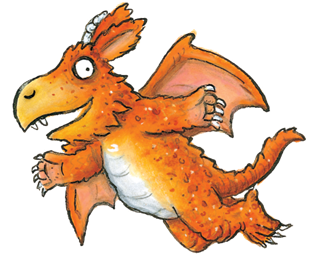
Figure 1. Character of Zog (picturebook)
Illustration © Axel Scheffler, 2010. Reproduced with permission of Scholastic Limited. All Rights Reserved.
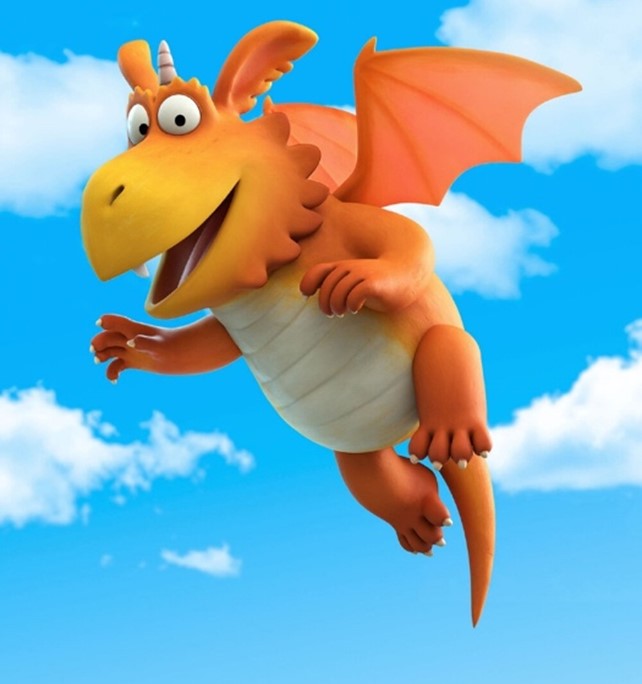
Figure 2. Character of Zog (animated movie)
© Orange Eyes Ltd. 2018.
Student teachers in general tend to prefer Axel Scheffler’s protagonist (Figure 1), because it appears more authentically like a dragon, slightly more dangerous and somewhat ‘rough around the edges’. The movie version is quite clearly ‘softened’ up; this image looks less threatening and more like a cuddly toy that children might want to own and play with. The dragon’s horn is shorter, the scales have disappeared, and the claws have a far less menacing appearance than the ones displayed in the picturebook prototype. The presumable purpose of this smoothed-down version of Zog is to be less scary. While the picturebook is a static medium and allows the young reader’s imagination to roam, the television adaptation is right before their eyes – they cannot escape the dragon that flies directly at them on the screen and, hence, his aggressiveness must be toned down for the younger members of the audience.
Following this comparison of the two representations of Zog, a more comprehensive process of exploring the two media formats is scheduled. Student teachers can be asked to critically analyze the way the picturebook story is told by means of the text and the illustrations and compare this to the conventions of film, which transforms the narrative into an entirely different experience. The opening scene of the movie, for instance, shows a knight riding towards the ruins of a castle and then smashing open the door of the chamber in which the captured princess lies in bed. At this moment, he is brutally attacked by the dragon and the two opponents become entangled in a lethal struggle which is interspersed with scenes that show Zog and his classmates running happily on the grass below the ruins until the viewers realise that the fight is merely in Zog’s imagination (in reality, he is mauling a short stick rather than a knight).
Once student teachers have come to terms with the concept of how film generally tends to highlight the ‘beautiful’ and the visually attractive, they can be confronted with longer and more complex visual representations that they proceed to analyze. Another example of the former that is regularly referred to in these courses is the description of Hermione in J.K. Rowling’s Harry Potter series with ‘lots of bushy brown hair and rather large front teeth’ (Rowling, 2000, p. 116) and, by contrast, the filmmaker’s choice to cast the attractive Emma Watson in this role rather than an actor who would embody the attributes provided in the novel. Further activities concentrate on movie clips from Stormbreaker (Prusse, 2022) or A Monster Calls (Prusse, 2025b), which are dissected critically to help the student teachers recognize some of the conventions that exist when translating verbal or multimodal narrative into moving images. Ultimately, close and deep reading of Anthony Browne’s Voices in the Park (1998) permits student teachers to become fully aware of how the interplay between text and image, the interpretation of the plot as well as of the illustrations, can enhance the understanding of this picturebook and ideally lays the foundations for future explorations into multiliteracies (Prusse, 2025b).
Investigating Student Teachers’ Perspectives on Picturebooks
Two groups of student teachers, those enrolled in a module titled Children’s Literature (autumn 2024) and a module titled Aspects of Children’s Literature (spring 2025), filled in a questionnaire on their experiences and familiarity with picturebooks prior to attending the courses. There were a total of 22 (out of 23) replies in the autumn course and 16 (out of 19) in the spring course. Apart from socio-demographic data (age, nationality, the teacher training programme and the age at which participants had started to learn English), the questionnaires addressed the following topics:
- Did they experience picturebooks in English during their time as pupils in kindergarten or school?
- Did they have any memories about the experience?
- Could they remember the teaching arrangement and activities?
- What were their thoughts on the function of picturebooks regarding language acquisition?
- Were (or are) they taught in their methodology classes about how to use picturebooks in English language teaching classes?
- Could they name one or several titles of picturebooks that they could imagine using in future?
A first analysis of the data yields several preliminary insights. Since there were Irish and Welsh student teachers in one course, naturally they replied that they had learned English from birth while their fellow students started learning English between the age of five and eleven. Among the participants in the other course there were no students from English-speaking countries, and the age when they had started to learn English ranged from four to eleven. Exactly half of the student teachers in the first course (50%) remembered English picturebooks from their time at school (including those that grew up in English-speaking countries). By contrast, in spring 2025 only 44% attested to having been taught English by means of picturebooks. These percentages are almost identical if the English speakers from the first course are deducted.
It is hardly surprising for lecturers invested in using children’s media in English language teaching that nobody who signed up for an elective in this field replied negatively to the question whether picturebooks are useful for language acquisition – in autumn 95% of the students affirmed their usefulness, with a slightly lower number asserting this in spring (88%). The remaining student teachers were not sure. Apparently, this view is not entirely shared by the lecturers in general ELT methodology classes who seem to be less likely to provide instruction in teaching English by means of picturebooks in the ELT classroom: only 41% of the students in the autumn course, including those from an English-speaking country, confirmed that they had received such instruction. Less than a third, namely 31% of the student teachers, received input on this in the spring term. It is in this context that the answers to the question whether they could name useful titles that they could use in the ELT classroom must be considered: Less than a quarter of the student teachers, 23%, could do so in autumn term; in spring term the number was even lower at 20%. These numbers seem to confirm that activities such as microteaching with picturebooks during the courses are essential to equip student teachers with the skills that are relevant for their future classrooms.
The Children’s Literature Blog
I created the children’s literature blog (Prusse, 2017) with a twofold purpose: on the one hand, it provides an opportunity to publish my own book reviews, interviews, and shorter analyses that would not necessarily make it into a scholarly journal (there are presently thirty entries I authored). On the other hand, the blog serves as an ever-expanding multimodal platform where student teachers may publish their written essays and share their entries with a worldwide audience (132 student texts by 31 March 2025). The choice of this format was inspired by Davidson, who pursued similar goals, albeit not with children’s literature, in a course with her students at Duke University (Davidson, 2011, p. 100). Comparing student essays handed in before the introduction of the blog and afterwards, it is striking to notice that the former were overall less carefully written than the ones destined to be published on the blog. This effect, presumably the result of (positive) peer pressure (Davidson, 2011, p. 101), has been observed by other practitioners, both at school and in higher education (e.g. Vogt & Schmelter, 2022). With the introduction of machine learning algorithms in combination with Large Language Models (LLM), it has become less a question of quality regarding the writing, and instead a question of quality regarding the research when student teachers make use of generative artificial intelligence and can be careless about checking the facts, the quotes, or the sources of their contributions. Student teachers are given the task to deal with the following three aspects when they prepare their blog entries:
- What is the book, the picturebook, the graphic novel, the movie, or the TV-series about? Contents, themes, interest for young readers or viewers etc.
- How can the respective narrative be brought into the classroom (original text, graphic novel version, film or drama adaptation, etc.)? What activities and which methodology would the student teachers suggest?
- Are there interesting aspects of the author’s biography? Do they want to include references to other books? Can they provide comments on the illustrator or the illustrations etc.
The main benefit of the blog consists in student teachers creating a resource on working with children’s and young adult media in (English) language teaching that serves their needs but that is also accessible for other users around the world. It is evident that the more contributions there are, the more interest is generated in different communities that require inspiration or support with bringing specific media formats into the classroom. The blog combines pictures, illustrations, and text and, as such, represents a multimodal model for the practical application of several literacies (the traditional ones as well as media literacy, including visual and digital literacy). Readers of a blog entry may leave comments for the author and for other readers; they can also suggest further teaching ideas or express personal responses to the contents and activities that are presented. Ultimately, this permits at least a limited amount of interaction across the worldwide web. Table 2 below demonstrates that the blog, after modest beginnings, has begun to attract a growing number of visitors and, at the end of 2024, these visits to the site crossed a threshold of 4,000.
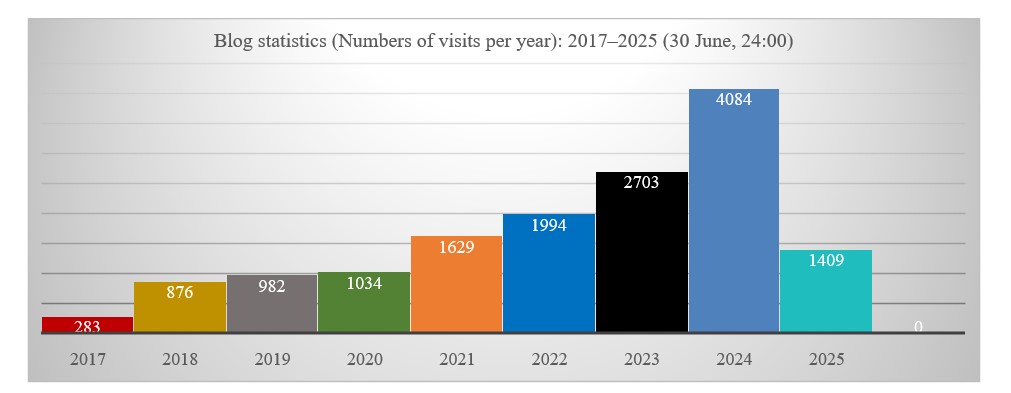
Table 2. Visitors of children’s literature blogsite per year (data supplied by WordPress)
Apart from Switzerland, where the blog is used in teacher education, the various contributions also attract attention from several countries, most of them English-speaking (see Table 3 below). It is certainly noteworthy that Germany, Spain, and Finland are the home of many visitors to the blog whereas it is possibly less surprising that English-speakers from the USA, the UK, India, Canada, or Australia seem to have discovered the blog as a resource.
| Rank | Country | Number of visits |
| 1 | Switzerland | 8,227 |
| 2 | United States of America | 2,751 |
| 3 | United Kingdom | 709 |
| 4 | Germany | 541 |
| 5 | India | 401 |
| 6 | Spain | 268 |
| 7 | Australia | 262 |
| 8 | Canada | 257 |
| 9 | Finland | 231 |
| 10 | Ireland | 200 |
Table 3. The ten countries with the highest number of visitors by 30 November 2025 (statistical data supplied by WordPress)
The top countries on the list of visitors to the blog above do not correlate with the background of the course participants (see Table 4 below), except for the position at the very top, which in both tables is taken by Switzerland. The latter fact is unsurprising since the courses are offered by a Swiss university that is also located within Switzerland. The remaining ranks in the respective tables offer a distinctly alternative picture. There were no exchange students from the United States, India, Canada, or Australia attending these courses in Zurich in the period from 2017–2025, and yet in the top ten, there are numerous visitors that accessed the blog from these countries. Moreover, a country like Finland that sent only two exchange students to Zurich in this period features high in the rankings while China, Hongkong und Taiwan, where quite a few student teachers originated from, do not contribute large numbers of website visitors.
| Rank | Country of origin | Number of students |
| 1 | Switzerland | 70 |
| 2 | Spain | 60 |
| 3 | China (including 29 students from Hongkong) | 40 |
| 4 | Ireland | 15 |
| 5 | The Netherlands | 11 |
| 6 | Germany | 8 |
| 7 | Norway / Taiwan | 6 each |
| 8 | United Kingdom / France / Japan / Sweden | 5 each |
Table 4. The top twelve nationalities of student teachers attending the course in children’s literature
(17 February 2017 to 30 June 2025)
While these numbers generate an overall impression of how frequently the website is noticed in general and in which regions of the world, they do not reveal who the visitors are, how long they remained there, or for what purpose they chose to access the blog.
The Road Forward
The student teachers’ learning on multiple literacies has been explored previously (Prusse, 2025a; 2025b). Their contributions to the blog were evaluated in these publications by means of reflexive thematic analysis (Braun & Clarke, 2006; 2020) and the results presented there are both encouraging and yet sobering at the same time. The evidence of a successful application of several literacies when student teachers compose their blog entries turned out to be to some degree disappointing. While appreciating the plethora of narrative media formats at their disposal, student teachers transferred this only to a limited extent when creating activities to be published on the blog (Prusse, 2025b, p. 147). A representative example can be found in the entry on Vivian French’s picturebook The Most Wonderful Thing in the World (2015). The student teacher convincingly presents a picturebook that she is delighted to have discovered. However, her entry mostly refers to the plot of the verbal story and presents only one activity that is linked to the illustrations, instructing educators to ‘show pupils the pictures of those elaborate gifts brought by suitors and match them with words/names’ (Liang, 2018). And yet, while picturebooks come in all shapes and sizes, in The Most Wonderful Thing in the World, the illustrations are extremely relevant, because they permit gradually increasing discoveries. In a contribution to The Observer, French highlights this fact in her observations about the images created by Angela Barrett: ‘The detail here is extraordinary; I’ve lived with this book for over three years, and I still see things that surprise and delight me’ (French, 2015, 1 November).
It would be unfair and unreasonable to blame individual student teachers for not focusing more intensively on the visual elements. However, such a minimal transfer effect from the examples presented in the course resulted in the appraisal that the influence of the teaching was, at most, moderate. Despite the growing literature on multiple literacies, the insight that media formats apart from print also need to be investigated in ELT classrooms appears to remain to a certain degree academic and does not seem to have achieved widespread representation in curricula and syllabi of teacher education.
The two student groups in Zurich, who supplied the data for this contribution, received a questionnaire on their experience with picturebooks before the course. Their answers generate a different picture, potentially because these students had been asked and, hence, were alerted to the significant but latent promise of this media format. The reiterative investigative cycles that characterize action research may thus have contributed to a more positive outcome. These student teachers have certainly acquired some awareness for the potential of multiliteracies in the classroom, even if they do not always explicitly label them as such when writing their contributions for the blog.
Thus, for instance, Sin Peng’s contribution on 星空 (Our Starry Starry Night) (2009) by Jimmy Liao emphasizes that the picturebook not only permits discussions about the verbal content that covers themes such as loneliness, friendship, and overcoming challenges but also invites activities that further arts appreciation. The fact that the book has been adapted as a movie, including a theme song that may also be explored or sung with the learners, clearly indicates that the student has multiple literacies in mind (visual literacy, film literacy, audio literacy) when she writes that ‘these media are suitable for educational purposes as well’ (Peng, 2024).
In his blog entry on The Gruffalo, Morgan Horrocks unmistakably refers to several literacies. He describes the BBC film adaptation as ‘a fantastic resource for visual storytelling’ and adds: ‘Creative tasks like making “Gruffalo masks” or inventing and describing new monsters can link literacy and art, while music lessons can involve recreating woodland sounds inspired by the story’ (Horrocks, 2024). In addition to the literacies that Sin Peng’s blog entry mentions, Horrocks also includes the creation of masks which could arguably represent haptic and spatial literacy.
Concluding Thoughts
The encouraging examples of the two student cohorts (X, autumn 2024, and Y, spring 2025) considered for this article may be supplemented by quotations from the feedback by individual student teachers at the end of the respective semesters. Their statements clearly convey that at least some of the learning goals have been reached. Most of the participants report that they have profited to some extent and have come to understand picturebooks as ‘a useful tool throughout all grades, not just for lower grades’ (Y6). A representative answer that covers almost the entire group is the following one:
I didn’t know many of the picturebooks that we looked at in class. So, this class definitely gave me many ideas of what types of picturebooks there are and how we can implement [them] in teaching. Through the many presentations we also got to learn a lot from our peers (X2).
This statement establishes that two aims for the course have been achieved. First, student teachers have developed an awareness of the learning opportunities afforded by picturebooks and, second, they have realized to what extent they can benefit from the knowledge of their peers. From my perspective, the most rewarding replies come from those student teachers that report on their personal development, ‘This course changed my understanding of picturebooks by revealing how deep, complex, and multi-layered they can be’ (Y7). Another striking response is the one where a (primary school) student teacher explains how their perspective has shifted during the semester:
This class changed my view of picturebooks by showing them as multimodal texts, where words and images work together to create deeper meaning. I now understand how visuals can challenge or enhance the text, encouraging critical thinking. Additionally, I’ve learned that picturebooks address complex themes like identity and social issues, making them powerful tools for visual literacy and critical thinking, not just early reading (X8).
The primary aim of the two modules on children’s literature, including the interviews, the questionnaires, and the feedback, serves ‘enhancing students’ learning’ (Koshy, 2010, p. 1) and is ‘deployed to the benefit of learners, teachers, and language education more generally’ (Burns, 2019, p. 1003). The present results from these last cycles of action research are an encouraging signal to persevere in these endeavours and, consequently, to continue with supporting the implementation of multiliteracies, not only in teacher education, but also in classrooms in German-speaking Switzerland as well as all over the world.
Bibliography
A Monster Calls (2016). [Film] Dir. Juan Antonio García Bayona. Participant Media.
Browne, Anthony (1998). Voices in the Park. Doubleday.
Donaldson, Julia, & Scheffler, Axel (2010). Zog. Alison Green.
French, Vivian, & Barrett, Angela (2015). The Most Wonderful Thing in the World. Walker Books.
Liao, Jimmy (2009). 星空 (Our Starry Starry Night). Locus.
Rowling, J.K. (1997/2000). Harry Potter and the Philosopher’s Stone. Bloomsbury.
Stormbreaker (2006). [Film] Dir. Geoffrey Sax. Samuelson Productions.
Zog (2018). [Film] Dir. Max Lang. Magic Light Pictures.
References
Altrichter, H., Feldman, A., Posch, P. & Somekh, B. (2008). Teachers investigate their work: An introduction to action research across the professions. (2nd ed.). Routledge.
Alruthaya, S., Mantei, J., White, S.L.J. & Kervin, L. (2025). Moving towards a more comprehensive understanding of multimodal text complexity. The Australian Journal of Language and Literacy, 48, 119–139. https://doi.org/10.1007/s44020-025-00079-9
Anstey, M., & Bull, G. (2006). Teaching and learning multiliteracies: Changing times, changing literacies. Australian Literacy Educators’ Association/ALEA.
Anstey, M., & Bull, G. (2009). Developing new literacies: Responding to picturebooks in multiliterate ways. In J. Evans (Ed.), Talking beyond the page. Reading and responding to picturebooks (pp. 26–43). Routledge.
Bautista, J.C., & Gutierrez, M.R.M. (2022). A Grounded Theory on the Comprehension Processing of Teachers as ESL Readers of Multimodal Still Visuals. RELC Journal, 53(3), 582–596. https://doi.org/10.1177/0033688220943250
Bland, J. (2015). Pictures, images, and deep reading. Children’s Literature in English Language Education, 3(2), 24–36.
Bland, J. (2022). Compelling stories for English language learners: Creativity, interculturality and critical literacy. Bloomsbury Academic.
Boehm, G. (1994). Was ist ein Bild? Fink.
Braun, V. & Clarke, V. (2006). Using thematic analysis in psychology. Qualitative Research in Psychology, 3(2), 77–101. https://doi.org/10.1191/1478088706qp063oa
Braun, V. & Clarke, V. (2021). Can I use TA? Should I use TA? Should I not use TA? Comparing reflexive thematic analysis and other pattern-based qualitative analytic approaches. Counselling and Psychotherapy Research, 21(1), 37–47. https://doi.org/10.1002/capr.12360
Bull, G., & Anstey, M. (2019). Elaborating multiliteracies through multimodal texts: Changing classroom practices and developing teacher pedagogies. Routledge.
Burns, A. (2019). Action research in English language teaching: Contributions and recent developments. In X. Gao (Ed.), Second handbook of English language teaching (pp. 991–1005). Springer International Handbooks of Education. https://doi.org/10.1007/978-3-030-02899-2_52
Burns, A. (2024). In-service teacher education and action research. In A. Burns & K. Dikilitaş (Eds.), Routledge handbook of language teacher action research. Taylor & Francis. https://doi.org/10.4324/9781003367352-29
Davidson, C. N. (2011). Now you see it: How technology and brain science will transform schools and business for the 21st century. Penguin.
Evans, J. (2009). Talking beyond the page. Reading and responding to picturebooks. Routledge.
French, V., & Barrett, A. (2015). The most wonderful thing in the world – in pictures. The Observer, 1 November 2015. Retrieved March 4, 2025, from The most wonderful thing in the world – in pictures | Children’s books | The Guardian
Goldstein, B. (2016). Visual literacy in English language teaching. Part of the Cambridge Papers in ELT series. Cambridge: Cambridge University Press.
Grizzle, A., Wilson, C., & Gordon, D. (Eds.) (2021). Think critically, click wisely! Media & information literacy curriculum for educators and learners. Paris: UNESCO. Retrieved April 21, 2026, from, https://www.unesco.org/mil4teachers/sites/default/files/medias/fichiers/2023/10/Part_1_CI%20MIL_CURRICULUM.pdf
Guo, D., Rich, E. E., & Coleman, J. M. (2024). Secondary pre-service teachers’ visual literacy: instructional strategies in social studies. Journal of Visual Literacy, 43(3), 308–325. https://doi.org/10.1080/1051144X.2024.2429318
Hallet, W. (2008). Visual Culture, Multimodal Discourse und Tasks. Die bildkulturelle Dimension des Fremdsprachenlernens. In A. Müller-Hartmann & M. Schocker-v. Ditfurth (Eds.), Aufgabenorientiertes Lernen und Lehren mit Medien, (pp. 167–183). Peter Lang.
Horrocks, M. (2024, 23 November). The Gruffalo. Children’s Literature Blog. Retrieved March 24 2025, from https://childrensliteratureblogsite.wordpress.com/2024/11/23/morgan-horrocks-the-gruffalo/
Kalantzis, M., Cope, B., Chan, E. & Dalley-Trim, L. (2016). Literacies. (2nd ed.). Cambridge University Press.
Kalantzis, M., & Cope, B. (2025). Multiliteracies since social media and artificial intelligence. Harvard Educational Review, 95(1), 135–151. https://doi.org/10.17763/1943-5045-95.1.135
Koshy, V. (2010). Action research for improving educational practice: A step-by-step guide. (2nd ed.). Sage.
Kress, G., & Van Leeuwen, T. (2021). Reading Images: The Grammar of Visual Design. (3rd ed.). Routledge. https://doi.org/10.4324/9781003099857
Levratto, V., Gómez, H. G., & López, J. R. (2024). Implementing visual literacy techniques among future educators in pre-school and primary school settings. Journal of Visual Literacy, 43(4), 326–343. https://doi.org/10.1080/1051144X.2024.2432802
Liang, L. (2018, 7 December). The most wonderful thing in the world by Vivian French. Children’s Literature Blog. Retrieved March 27, 2025, from Lili Liang: «The Most Wonderful Thing in the World» by Vivian French – Children’s Literature Blog
Lim, F. V., Toh, W., & Nguyen, T. T. H. (2022). Multimodality in the English language classroom: A systematic review of literature. Linguistics and Education, 69, 101048. https://doi.org/10.1016/j.linged.2022.101048
Lütge, C. (2018). Digital, transcultural and global? Reconsidering the role of literature in the EFL classroom. In A.-J. Zwierlein, Petzold, J., Boehm, K. & Decker, M. (Eds.), Anglistentag 2017 Regensburg: Proceedings (pp. 299–309). WVT.
McCloud, S. (1994). Understanding comics: The invisible art. Harper Perennial.
New London Group. (1996). A pedagogy of multiliteracies: Designing social futures. Harvard Educational Review, 66(1), 60–92. https://doi.org/10.17763/haer.66.1.17370n67v22j160u
Nikolajeva, M. & Scott, C. (2001). How picturebooks work. Garland.
Pantaleo, S. (2009). Exploring children’s responses to the postmodern picturebook Who’s Afraid of the Big Bad Book? In J. Evans (Ed.), Talking beyond the page. Reading and responding to picturebooks (pp. 43–61). Routledge.
Peng, S. (2024, 17 June). Starry Starry Night by Jimmy Liao. Children’s Literature Blog. Retrieved March 20, 2025, from Sin Peng: «Starry Starry Night» by Jimmy Liao – Children’s Literature Blog
[PHZH] Pädagogische Hochschule Zürich (2025). PH Zurich Partner Universities. Retrieved March 22, 2025, from https://phzh.ch/en/international/international-relations-and-exchange/partner-universities/
Prusse, M. C. (2017, 17 February). Children’s and young adult literature in the ELT classroom. Children’s Literature Blog. Retrieved March 18, 2025, from https://childrensliteratureblogsite.wordpress.com/
Prusse, M. C. (2022). The hero’s journey as a narrative template across the media in EFL teaching. In C. Lütge. (Ed.), Foreign language learning in the digital age: Theory and practice for developing literacies (pp. 79–90). Routledge.
Prusse, M. C. (2025a). English language teaching in the digital age: Narrative across the media, multiliteracies, and blogs. Educational Linguistics, 4(2), 216–233. https://doi.org/10.1515/eduling-2025-0013
Prusse, M. C. (2025b). Children’s and young adult literature as a springboard for multiliteracies. In Bacovsky, T., Dalton-Puffer, C., Heaney, H. & Hüttner, J. (Eds.), Current challenges in language teacher education (pp. 133–149). Cambridge Scholars.
Prusse, M. C. (2025c). Erziehung für Drachen. Akzente 1(2025), 34.
Serafini, F., & Reid, S. F. (2022). Analyzing picturebooks: semiotic, literary, and artistic frameworks. Visual Communication, 23(2), 330–350. https://doi.org/10.1177/14703572211069623
Serafini, F. (2024). Developing metamodal awareness. Children’s Literature in English Language Education, 12(2), 1–19.
Serafini, F. (2014). Reading the visual. An introduction to teaching multimodal literacy. Teachers College Press.
Serafini, F. (2009). Understanding visual literacy in picturebooks. J. Evans (Ed.), Talking beyond the page. Reading and responding to picturebooks (pp. 9–25). Routledge.
Stephens, J. (2007). Visual literacy – enabling and promoting critical viewing. In Sawyer, W. & Gold, E. (Eds.), Reviewing English in the 21st Century (pp. 253–261). Phoenix Education.
Vogt, K., & Schmelter, L. (2022). Fremdsprachliche Bildung in der digitalen Welt. Die digitale Transformation im Fokus der Fremdsprachendidaktik. In Frederking, V. & Romeike, R. (Eds.), Fachliche Bildung in der digitalen Welt (pp. 121–142). Waxmann.